
Ultimate Mining Tycoon Splitters and Belts Guide
Route ore, alloys, and Power Core components without jams — straight lines, smart splits, minimal complexity.
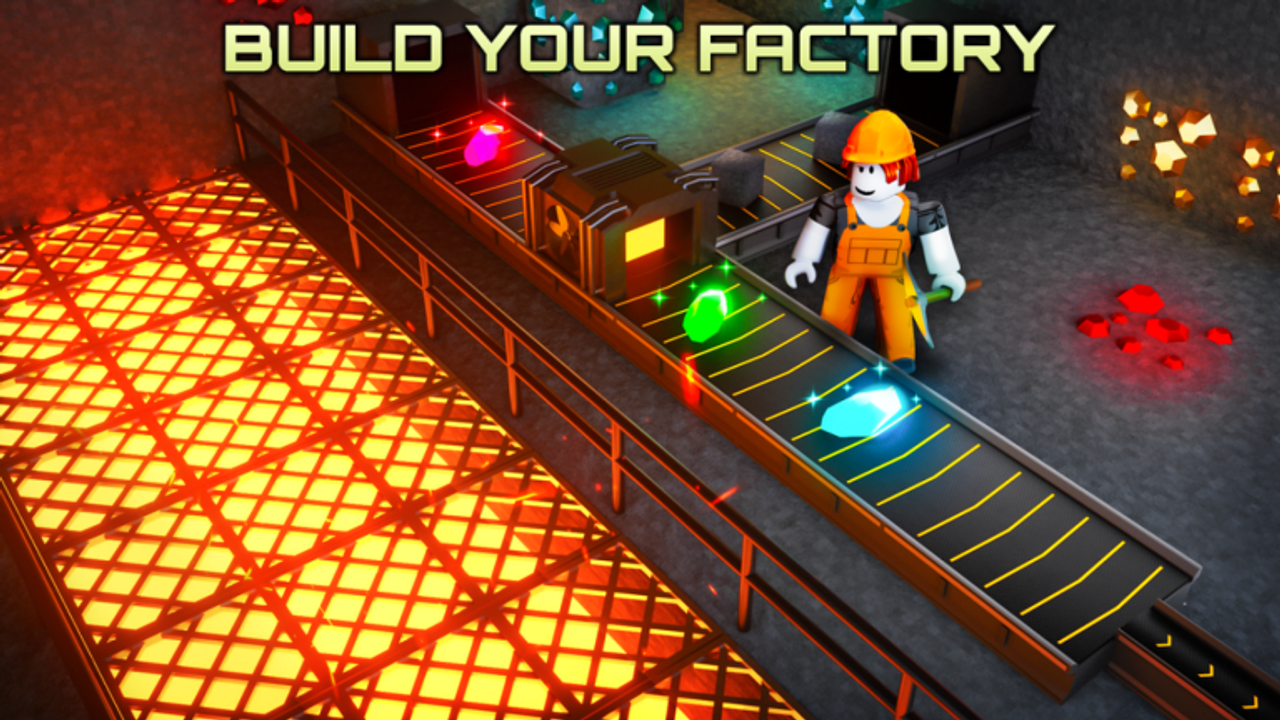
Conveyors are not decoration in Ultimate Mining Tycoon — they are the nervous system of your 30+ machine factory. Innovation Inc.’s tycoon (madattak and Rolijok, place ID 18680867089, v0.5.13) counts every belt tile and splitter toward the 4,000 complexity cap. Misplaced routing causes jams that idle Super Crawler dumps and stall Power Core Assembler lines worth millions. This guide explains Splitter, Three-Way Splitter, and Overflow Splitter behavior (including v0.5.x overflow fixes), 1-to-2/3/4/5/10 schematics, and the straight-line philosophy from Factory Layout.
Pair with Machines Reference for processor costs and Factory Chain Reference for recipe order.
Belt fundamentals
Every factory item travels one tile per tick on conveyors unless blocked. Blocked items back up upstream until machines idle or the unloader overflows visually.
Core rules:
- Straight segments have the fewest failure points.
- 90° turns and long Connector chains are jam magnets — minimize them.
- Machine input/output ports must align; offset Stamper three tiles sideways guarantees bolt piles.
- After v0.5.7, spinning gears do not prove processing — trust item icons on belts.
Mid-game income dies when belts look busy but nothing reaches sell points — verify one ore end-to-end before long mining trips.
Splitter types
Build Shop support parts include standard splitters for parallel routing:
| Part | Behavior (typical) |
|---|---|
| Splitter | Alternates or splits flow between two outputs |
| Three-Way Splitter | Divides flow across three lanes |
| Overflow Splitter | Sends items down primary lane until full, then overflow branch |
Exact alternation timing matters less than downstream consumption rate — a splitter feeding two starved machines looks fine until one machine speeds up and steals 100% of items.
Overflow Splitter (v0.5.x behavior)
Overflow Splitter is the most important late-game routing tool. Patch v0.5.4 fixed blocking and random overflow bugs on sifters and overflow splitters; v0.5.8 added splitter state saving between sessions so factory reloads do not unbalance ratios.
Current community-tested behavior (v0.5.x):
- Primary (main) line is prioritized when clear — items flow straight through to your Power Core or sell spine first.
- When the main line backs up (machine full, sell clogged), surplus diverts to the overflow branch.
- Use overflow to dump stone byproducts, surplus glass, or ceramic casing without stopping Smelters (required since v0.5.0 stone clog rule).
Bad use: overflow into another jammed lane — you only moved the pile.
Good use: Smelter stone → overflow → sell point while metal continues main spine.
1-to-N schematics
Splitters scale to multi-output factories. Common configurations:
1-to-2
[Machine output] → [Splitter] → Branch A (primary process)
                              └→ Branch B (sell overflow / byproduct)
Use for Alloy Furnace dual inputs — split smelter output to both alloy mouths evenly. See Alloys and Tempering.
1-to-3 (Three-Way Splitter)
[Unloader] → [Three-Way] → Metal smelter spine
                         → Gem filter spine
                         → Overflow sell
Separate gems early — mixing gem and ore on one belt without filters causes mid-game chaos.
1-to-4 / 1-to-5
Late electronics often split coil outputs to multiple Magnetic Machine inputs or parallel Stamper banks. Only build when each branch has dedicated sell or process capacity — four hungry Stampers with one smelter starves three lanes.
1-to-10 (Power Core casing split)
Endgame Power Core Assembler needs metal casing, electromagnet, and superconductor converging at precise ratios. Community layouts use a 1-to-10 split on casing production while magnet and superconductor ride dedicated straight spines:
[Casing Machine] → [1-to-10 split] → Power Core Assembler inputs (×10 capacity pattern)
[Magnetic Machine] → straight spine ────────────────┘
[Superconductor Constructor] → straight spine ──────┘
Do not 1-to-10 split magnets and superconductors through the same maze — their craft rates differ. Feed each component on its own straight line, merge only at the assembler mouth. Full chain: Circuit and Electronics and Endgame Factory.
The embedded community distinction: casings benefit from wide fan-out because Power Core recipes consume many casing units relative to magnets in some layouts; magnets and superconductors jam if forced through identical split ratios.
Jam prevention checklist
| Symptom | Likely cause | Fix |
|---|---|---|
| Bolts pile on corner | Tight 90° turn | Straighten or widen turn |
| One Alloy input empty | Uneven 1-to-2 split | Buffer belt or dedicated smelter per input |
| Smelter stopped | Stone not cleared | Overflow stone to sell |
| Circuit Maker idle | Glass/coils imbalanced | Fix stonework ratio, not more splitters |
| Power Core starved | Casing split without magnet feed | Separate spines per component |
| Full unloader, empty sell | Downstream jam miles away | Walk belt backward from sell point |
Complexity cost of excess conveyors
Each belt tile and splitter consumes complexity. Decorative loops can waste 200–400 complexity — enough to block a Quality Assurance or Laser Maker install.
Audit habit before buying endgame machines:
- Open complexity meter in build mode.
- Delete any belt that does not move product toward sell or required input.
- Replace connector detours with one splitter and one straight segment.
- Leave 500+ headroom for patch additions and prestige machines.
Endgame plots targeting Power Core often sit at 2,800–3,500 complexity when built efficiently — see Machines Reference.
Straight-line philosophy
Top players repeat one mantra: straight to the point.
- Unloader → process chain → sell in one visual row when plot width allows.
- Branch sideways for gems and stonework, not diagonally through the main row.
- Elevators are acceptable for vertical returns (temper loops); horizontal connector spaghetti is not.
- When a YouTube layout uses 40 connector tiles, ask which three splitters replace them.
Factory Layout expands spatial discipline; this page covers when to split versus when to delete belts entirely.
Splitters with prestige machines
Post-prestige routing adds machines before the smelter:
[Unloader] → [Ore Upgrader] → [Philosopher's Stone] → Smelter spine…Dust overflow → Nano Sifter → back into upgrader line. Use overflow splitters so sifter byproduct does not clog upgraded ore. Duplicator late paths compound split ratios — plan before placing 1-to-5 grids you cannot debug.
Details: Prestige Machines.
Patch notes that affect belts
| Patch | Belt impact |
|---|---|
| v0.5.0 | Smelter stops if stone not removed — overflow routing mandatory |
| v0.5.4 | Overflow splitter blocking fixes |
| v0.5.7 | Animations decoupled — verify belt icons |
| v0.5.8 | Splitter state persists on factory load |
| v0.5.12 | Immediate factory save — fewer ghost items on belts |
Full list: Updates Hub.
Related pages
- Factory Layout — plot-wide design principles
- Endgame Factory — Power Core merge points
- Circuit and Electronics — dual-input Circuit Maker splits
- Machines Reference — support parts list
- Factory Chain Reference — recipe dependencies
- Updates Hub — splitter and smelter patch history
Splitters solve bottlenecks — they do not create them. Build straight, split only where byproducts or multi-input machines demand it, and delete every belt that exists “just because.”
Frequently Asked Questions
Quick answers to the most common questions.
What does Overflow Splitter do in v0.5.x?
It prioritizes the main line when clear and sends surplus to the overflow branch when the primary path backs up. v0.5.4 fixed blocking bugs; v0.5.8 saves splitter state on load.
When should I use a Three-Way Splitter?
When splitting unloader output between metal, gem, and overflow sell spines — or when feeding three parallel processors with steady upstream production.
Why use 1-to-10 on Power Core layouts?
Casing production often needs wide fan-out to feed Power Core Assembler demand. Magnets and superconductors should stay on separate straight spines with different rates.
Do belts count toward complexity?
Yes. Every belt tile, splitter, connector, and machine counts toward the 4,000 complexity cap per plot.
Why did my Smelter stop after adding splitters?
Since v0.5.0 the Smelter halts if stone byproduct is not removed. Route stone through an overflow splitter to a sell point, not into a dead-end branch.
How do I fix a jammed corner belt?
Replace tight turns with straight segments or widen the turn. Delete unnecessary connector detours — one splitter plus a straight belt often fixes it.